· Snark Labs · Stacks · 5 min read
The Recovery Stack: BPC-157 + TB-500
BPC-157 builds the blood supply. TB-500 moves the cells in to do the work. These are the two most-studied repair peptides, and their mechanisms are directly complementary rather than redundant.
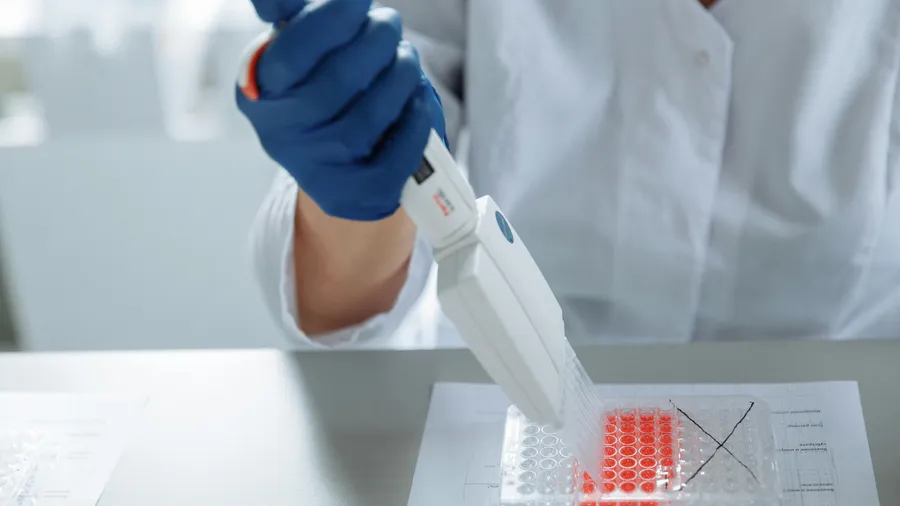
Research-grade BPC-157, third-party COA verified
Affiliate link — we earn a commission at no extra cost to you. Sold for research purposes only. Not for human consumption.
Research-grade TB-500, third-party COA verified
Affiliate link — we earn a commission at no extra cost to you. Sold for research purposes only. Not for human consumption.
Research disclaimer: These compounds are sold for research purposes only and are not intended for human consumption.
Evidence Tier for This Combination
Animal studies — rodent models for both compounds individually and in combination. No human RCT data for either compound or the stack.
This is the most commonly researched peptide combination in the repair category. Both compounds have substantial animal literature independently. A smaller number of studies have examined them together and found additive benefit in wound healing and tendon repair models. Mechanistic complementarity is well-established.
Why These Two Work Together
Tissue repair requires two things that are often disrupted by injury: blood supply and cellular migration. BPC-157 addresses the first; TB-500 addresses the second. They do not share a mechanism, which means stacking them is additive rather than redundant.
BPC-157 → Angiogenesis
BPC-157 is a 15-amino acid peptide derived from a protective protein in gastric juice. Its primary mechanism in tissue repair is upregulation of VEGF (vascular endothelial growth factor) and its receptor VEGFR2, which drives angiogenesis — the formation of new blood vessels. Injured tendons, ligaments, and muscles heal slowly partly because they are poorly vascularised. BPC-157 directly addresses this bottleneck by restoring blood supply to the injury site.
Secondary mechanisms include nitric oxide system modulation and growth hormone receptor sensitisation in tendon fibroblasts.
TB-500 → Cell Migration
TB-500 is a synthetic fragment of Thymosin Beta-4 corresponding to the actin-binding domain. Its core mechanism is G-actin sequestration, which shifts cells from static to migratory state. Repair requires fibroblasts, myoblasts, and other repair cells to physically move to the injury site. TB-500 facilitates this migration. It also upregulates MMP-2 (matrix metalloproteinase-2), which breaks down the extracellular matrix that would otherwise block cell movement into damaged tissue.
Why They Complement Each Other
In a simplified repair sequence: TB-500 enables cells to migrate to the injury → BPC-157 builds the vascular infrastructure those cells need to survive and function. Running only one leaves a gap in the sequence. Running both closes it.
Animal studies examining the combination in Achilles tendon transection models found faster return of tensile strength compared to either compound alone.
Timing Protocol
Acute injury protocol (first 4 weeks):
| Time | BPC-157 | TB-500 |
|---|---|---|
| Daily | 250–500 µg SC or IM | — |
| 2x per week | — | 2–2.5 mg SC or IM |
Maintenance / subacute protocol (weeks 5–8):
| Compound | Dose | Frequency |
|---|---|---|
| BPC-157 | 250 µg | Daily or every other day |
| TB-500 | 2 mg | Once weekly |
Injection site: For musculoskeletal injuries, administering BPC-157 close to the injury site (proximal subcutaneous) is commonly used in animal models and may be relevant for local VEGF upregulation. TB-500’s mechanism is more systemic — abdominal subcutaneous injection is standard.
For gut healing applications, BPC-157 oral is the primary route (see the Beginner Stack for no-injection protocols). TB-500 does not have established oral bioavailability.
Dosing Table
| Compound | Form | Dose | Route | Frequency | Duration |
|---|---|---|---|---|---|
| BPC-157 | Acetate salt | 250–500 µg | SC or IM | Daily | 4–8 weeks |
| TB-500 | Lyophilised | 2–2.5 mg | SC or IM | 2x/week (loading) | 4–6 weeks |
| TB-500 | Lyophilised | 2 mg | SC or IM | 1x/week (maintenance) | Ongoing |
Reconstitution reference:
- BPC-157 5 mg vial + 2 mL bacteriostatic water = 2,500 µg/mL. 250 µg = 0.1 mL = 10 units on U-100 syringe.
- TB-500 5 mg vial + 2 mL bacteriostatic water = 2,500 µg/mL. 2 mg = 0.8 mL = 80 units on U-100 syringe.
Application Areas
Tendon and Ligament Injuries
The strongest application based on animal literature. Achilles tendon, ACL, rotator cuff, and MCL models all show accelerated healing. The combination is particularly relevant here because tendon tissue is poorly vascularised by nature, and both mechanisms (angiogenesis + cell migration) are needed.
Muscle Tears
TB-500 has a specific literature base for muscle laceration healing. BPC-157 adds vascular support. Both compounds have been studied in this context.
Gut Healing
BPC-157 alone is the primary peptide for gut applications — its gastric origin gives it specific gut affinity and it is stable in gastric acid. TB-500 adds less in the gut context. For gut-only protocols, BPC-157 oral alone is more appropriate.
Post-Surgical Recovery
The combination’s ability to accelerate healing of sutured tissue has been examined in animal anastomosis models. This is a legitimate research application, though it remains animal data.
What to Expect Realistically
The animal data shows effects on healing speed and tissue quality, not miraculous recovery. Key caveats:
Load management still matters. Peptides do not override the mechanical requirements of healing tissue. Tendons that are overloaded before adequate healing will re-injure regardless of peptide use.
Timeline: Animal models show measurable differences in healing speed (tensile strength, collagen organisation) at 2–4 weeks. Human timelines are unknown. Expecting results within days is not grounded in the mechanism.
Chronic injuries may respond differently than acute injuries. Most animal data uses acute injury models. Chronic degeneration (tendinopathy rather than acute rupture) has a different biology.
No compound substitutes for structural repair where surgery is the appropriate intervention. These peptides are studied as adjuncts to healing, not alternatives to indicated medical care.
Summary
BPC-157 and TB-500 are the best-evidenced peptide combination for tissue repair in the animal literature, with mechanistically coherent complementarity — angiogenesis and cell migration are sequential requirements for healing, and each compound addresses one. The absence of human trial data is a genuine limitation. The animal data is, however, more extensive and consistent than most peptides reach.
For researchers working in musculoskeletal repair models, this is the logical starting point.
See also: BPC-157 research review · TB-500 research review · BPC-157 data page · TB-500 data page
Research-grade BPC-157, third-party COA verified
Affiliate link — we earn a commission at no extra cost to you. Sold for research purposes only. Not for human consumption.
Research-grade TB-500, third-party COA verified
Affiliate link — we earn a commission at no extra cost to you. Sold for research purposes only. Not for human consumption.